




Newsroom
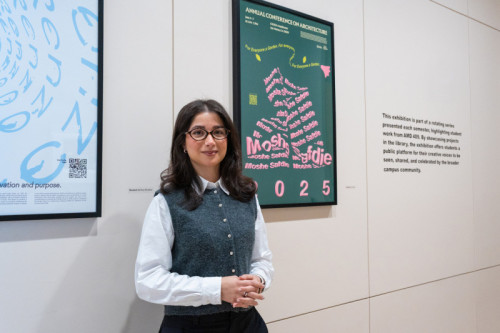
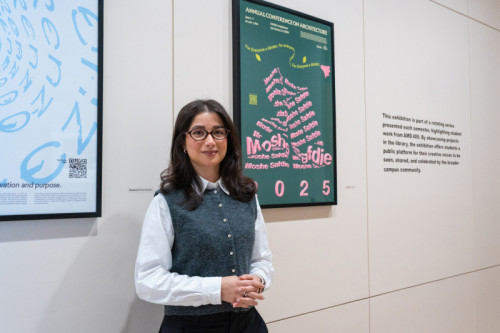
- New Gallery Showcases Student Art in LibraryThe event that inspired the class project was imaginary. But for Sonia Ellis and fellow Cal State San Marcos art students, the payoff was very real. Last year, Ellis was a student in AMD 409: Advanced Graphic Design and Visual Arts, an upper-division class taught by Ghazal Foroutan. The assignment: Using only typography, create a promotional poster for a hypothetical California architecture conference being hosted by CSUSM. The twist: Some of the posters that resulted would be displayed as part of a new student art gallery in Kellogg Library. Ellis made a poster about acclaimed Israeli-Canadian-American architect Moshe Safdie, and hers was one of 19 selected for the exhibit. “I was thrilled and honored to have my work chosen to be displayed in the library and kept in the archive,” said Ellis, an art, media and design major who’s scheduled to graduate this spring. “It gave a greater sense of purpose to the project.” The 19 posters compose the first installment of the Cougar Gallery, which is located on the library’s second floor, occupying the wall space between the Makery’s entrance and the stairwell down the hall. Foroutan said the idea came from a conversation with fellow art, media and design professor Kristin Moss, and it was brought to fruition through a collaboration with multiple employees of the library: associate dean Char Booth, outreach librarian Irma Ramos Arreaga, arts and humanities librarian Torie Quiñonez, and administrative coordinator Arely Ayala. The initial exhibit has adorned the library’s walls since the start of the fall semester. “Seeing the students’ work displayed in a prominent campus space has been incredibly meaningful,” Foroutan said. “As a professor, I am proud to share their work with the broader campus community and to see it recognized by the department and the library. “For students, the exhibition validates their efforts beyond the classroom. Many have already photographed their posters and plan to list the show as a group exhibition on their CVs, as well as include the work in their portfolios.” The Cougar Gallery, Booth said, fulfills a longstanding desire to increase the presence and visibility of student art in the library. As a prominent display of creative student work, it joins the Data Stacks on the library’s fourth floor. "By establishing this new gallery, we are showcasing the creative talents of CSUSM student artists and designers and dedicating a highly visible area of the library to School of Arts students and faculty as a much-needed supplementary gallery space,” Booth said. Once she was assigned Safdie as her subject (other famous architects featured include Frank Lloyd Wright and Frank Gehry), Ellis set out to make a poster that would promote a hypothetical discussion with the architect at the conference while also channeling the style and philosophy of that architect. In researching Safdie’s life and work, Ellis was drawn to his design theory, “For Everyone a Garden.” “He envisions architecture as a living, evolving environment, integrating gardens and green space into almost all of his designs,” she said. “That phrase became my guiding concept and tagline for the poster, inspiring my color palette and imagery.” Ellis incorporated both physical art and digital design in the creation of her poster. She also designed an accompanying booklet in the same style as the poster to round out the promotional material. “Over the weeks of working on the project, we all watched each other's concepts evolve in the studio, so seeing them printed professionally and displayed in a space where so many students pass through was very meaningful,” said Ellis, who plans to apply for the CSUSM teaching credential program, with a goal of becoming an art educator. Foroutan hopes to work with the library to rotate the exhibition at least once a year to showcase as many as much student artwork as possible. “While the overall framework of the project will remain consistent, I plan to subtly revise the assignment each year to introduce new constraints, tones or conceptual directions, allowing the exhibition to evolve over time,” she said. Media Contact Brian Hiro, Communications Specialist bhiro@csusm.edu | Office: 760-750-7306
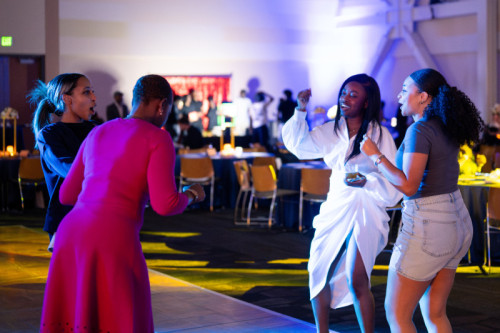
- Black Student Center to Host Monthlong Black Excellence CelebrationAs Cal State San Marcos commemorates Black Excellence Month, the Black Student Center will host a series of events to celebrate the brilliance and resilience across CSUSM through arts, education, student engagement and community fellowship. The monthlong celebration will conclude with the annual Black Excellence Gala on Feb. 27. Black Excellence Month Kickoff Feb. 2, 11:30 a.m.-2 p.m., USU 2310 The Black Student Center (BSC) will kick off the celebrations with a brief presentation discussing the history of the Pan-African flag, a raising of the flag and a live drumline performance. Food will be provided at the event, which is open to all students. Def Jam Open Mic Night Feb. 5, 5-7 p.m., USU Amphitheater The BSC, in collaboration with the Cross-Cultural Center, invites students to enjoy a night of poetry, spoken word and music. The event is open to all students. Professional Styling: How to Tie a Tie Feb. 9, 1-2 p.m., USU 3300 As part of the “My Brother’s Keeper” initiative, the BSC will host a session of professional styling to teach students how to tie a tie. The event is open to all students. Sista Fest Feb. 10, 5-7 p.m., USU 2310 In collaboration with the Women and Gender Equity Center, the BSC will host an event to celebrate Black women on campus. This year’s theme, “Rooted and Radiant,” is focused on providing mentorship to young Black women looking to navigate professional spaces. The keynote speaker is Wendy Stewart, MiraCosta College’s chief diversity officer. The event is open to all students. Black Jeopardy Game Night Feb. 13, 5-7 p.m., USU Ballroom Students are welcome to join the BSC for a night of culturally relevant games. Food will be provided on a first-come, first-served basis. Carnaval Feb. 18, 5-8 p.m., USU Ballroom Join the BSU and the Latinx Center for a celebration of dance and heritage from various communities across Latin America and the African diaspora. The event will feature live music, cultural foods and mask painting inspired by Rio de Janeiro’s Carnaval and New Orleans’ Mardi Gras festival. Ebony Fashion Show Feb. 20, 5-8 p.m., USU Ballroom The inaugural Ebony Fashion Show will provide a space for students to showcase their elegance on the runway. The event will highlight the creative expression of students across CSUSM student centers to showcase cultural displays through fashion. Black Org Fair Feb. 25, 5-7 p.m., Forum Plaza All students are invited to learn about the various Black student organizations at CSUSM. Representatives will be featured from various academic, social, faith-based and national Panhellenic Council organizations. 2/27 Black Excellence Gala Feb. 27, 5:30-8:30 p.m., USU Ballroom As the finale of Black Excellence Month, the BSC will host an inaugural event in collaboration with Tukwut Life to celebrate and highlight the Black community. The evening will showcase achievements and inspiring stories from the community, followed by a student performance and live DJ. Guests are encouraged to dress in their finest attire to honor the occasion and the remarkable accomplishments being celebrated. Media Contact Eric Breier, Interim Assistant Director of Editorial and External Affairs ebreier@csusm.edu | Office: 760-750-7314
Student Announcements
- Donate to the Student Athlete Advisory Committee Basic Needs DriveThe Student Athlete Advisory Committee will be hosting a basic needs drive from Feb. 2-8 to donate to our local community. We are kindly requesting donations, including but not limited to: warm clothing, non-perishable food items, household items, new hygiene products, etc. Donations will be accepted in the Clarke Field House suites as well as upcoming CSUSM Home games! Free admission will be given to those who bring a donation. We will be collecting donations at REC Night ahead of the men’s and women’s basketball double header games beginning at 5 pm. Follow our Instagram page @csusm_saac for more info and updates! Come support our athletic teams and a good cause!!
- Seeking Healthy Adults for Exercise Training StudyHealthy adults ages 18 - 60 years old are needed to take part in a 12 week exercise training study taking place on main campus at CSUSM. Exercise training consists of two 10 minute sessions per week for 12 weeks. Study completion provides an incentive equal to $250. For more information, contact Dr. Todd A. Astorino, Professor, Department of Kinesiology at astorino@csusm.edu.

News Release
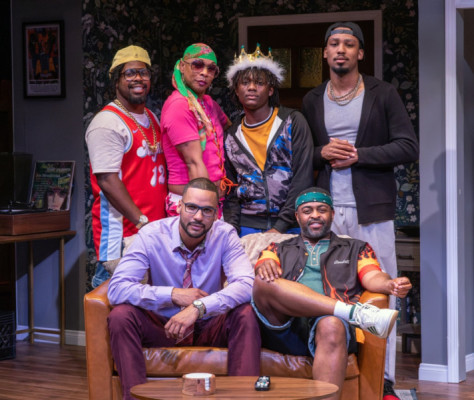
- Two From CSUSM Receive Craig Noel Award NominationsTwo members of the Cal State San Marcos community have been nominated for the Craig Noel Award for “Outstanding Featured Performance in a Play.” Hosted annually by the San Diego Theatre Critics Circle (SDTCC), the Craig Noel Awards recognize the achievements of professional theatres throughout San Diego County. The award show is Feb. 16 at the Joan B. Kroc Theatre. Kevane Coleman, an administrative support coordinator for the College of Humanities, Arts, Behavioral and Social Sciences, has been nominated for his role in “The Hot Wing King” at the Cygnet Theatre. Zack King, a lecturer in the School of Arts, has been nominated for his role in “To My Girls” at the Divisionary Theatre. “Several years ago, I made a conscious shift to center my work more fully in Blackness/Brownness and Queerness,” Coleman said. “I knew that choice might come with risk. I wondered if I would work less, if narrowing my focus would somehow limit my opportunities. Instead, the opposite has been true. I have continued to work just as consistently as I did when I was primarily performing in white-centered stories, if not more, and my heart is full because the art that I am making now is so much fuller and richer for me.” SDTCC is a nonprofit organization of professional writers in San Diego County. The Craig Noel Awards, named in honor of the late artistic director of the San Diego Old Globe Theatre and a champion of the arts nationwide, highlight the excellence of professionals in San Diego theater. Nominees were chosen by an all-volunteer membership of professional critics who write year-round for San Diego newspapers, magazines and online publications. Media Contact Eric Breier, Interim assistant director of editorial and external affairs ebreier@csusm.edu | Office: 760-750-7314
- New Gallery Showcases Student Art in LibraryThe event that inspired the class project was imaginary. But for Sonia Ellis and fellow Cal State San Marcos art students, the payoff was very real. Last year, Ellis was a student in AMD 409: Advanced Graphic Design and Visual Arts, an upper-division class taught by Ghazal Foroutan. The assignment: Using only typography, create a promotional poster for a hypothetical California architecture conference being hosted by CSUSM. The twist: Some of the posters that resulted would be displayed as part of a new student art gallery in Kellogg Library. Ellis made a poster about acclaimed Israeli-Canadian-American architect Moshe Safdie, and hers was one of 19 selected for the exhibit. “I was thrilled and honored to have my work chosen to be displayed in the library and kept in the archive,” said Ellis, an art, media and design major who’s scheduled to graduate this spring. “It gave a greater sense of purpose to the project.” The 19 posters compose the first installment of the Cougar Gallery, which is located on the library’s second floor, occupying the wall space between the Makery’s entrance and the stairwell down the hall. Foroutan said the idea came from a conversation with fellow art, media and design professor Kristin Moss, and it was brought to fruition through a collaboration with multiple employees of the library: associate dean Char Booth, outreach librarian Irma Ramos Arreaga, arts and humanities librarian Torie Quiñonez, and administrative coordinator Arely Ayala. The initial exhibit has adorned the library’s walls since the start of the fall semester. “Seeing the students’ work displayed in a prominent campus space has been incredibly meaningful,” Foroutan said. “As a professor, I am proud to share their work with the broader campus community and to see it recognized by the department and the library. “For students, the exhibition validates their efforts beyond the classroom. Many have already photographed their posters and plan to list the show as a group exhibition on their CVs, as well as include the work in their portfolios.” The Cougar Gallery, Booth said, fulfills a longstanding desire to increase the presence and visibility of student art in the library. As a prominent display of creative student work, it joins the Data Stacks on the library’s fourth floor. "By establishing this new gallery, we are showcasing the creative talents of CSUSM student artists and designers and dedicating a highly visible area of the library to School of Arts students and faculty as a much-needed supplementary gallery space,” Booth said. Once she was assigned Safdie as her subject (other famous architects featured include Frank Lloyd Wright and Frank Gehry), Ellis set out to make a poster that would promote a hypothetical discussion with the architect at the conference while also channeling the style and philosophy of that architect. In researching Safdie’s life and work, Ellis was drawn to his design theory, “For Everyone a Garden.” “He envisions architecture as a living, evolving environment, integrating gardens and green space into almost all of his designs,” she said. “That phrase became my guiding concept and tagline for the poster, inspiring my color palette and imagery.” Ellis incorporated both physical art and digital design in the creation of her poster. She also designed an accompanying booklet in the same style as the poster to round out the promotional material. “Over the weeks of working on the project, we all watched each other's concepts evolve in the studio, so seeing them printed professionally and displayed in a space where so many students pass through was very meaningful,” said Ellis, who plans to apply for the CSUSM teaching credential program, with a goal of becoming an art educator. Foroutan hopes to work with the library to rotate the exhibition at least once a year to showcase as many as much student artwork as possible. “While the overall framework of the project will remain consistent, I plan to subtly revise the assignment each year to introduce new constraints, tones or conceptual directions, allowing the exhibition to evolve over time,” she said. Media Contact Brian Hiro, Communications Specialist bhiro@csusm.edu | Office: 760-750-7306
Steps Magazine
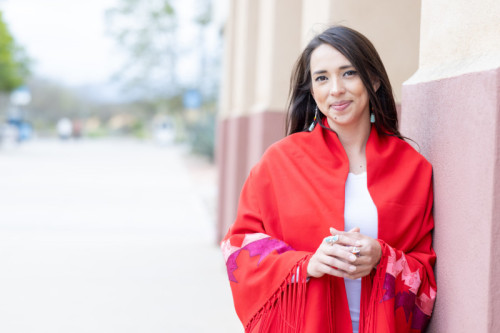
- Alumna Finds Purpose in Advocacy for Native Children and FamiliesAs Maya Goodblanket reflects on her time as a student, she vividly remembers the day she found the California Indian Culture and Sovereignty Center at Cal State San Marcos. Goodblanket was nervous about checking out the CICSC. She didn’t know anyone on campus and was unsure about going inside. But she mustered the courage to open the door, and all of her anxiety disappeared as she was instantly welcomed. Little did she know that she was meeting mentors that day who would help her achieve the career she has today. Through intentional support from faculty and staff and inclusive spaces like the CICSC, CSUSM equips students to lead with identity, purpose and impact. “I was looking for that connection to my culture, and I found it on campus,” said Goodblanket, who received a bachelor’s degree in psychological science and a Master of Social Work at CSUSM. “I'm an out-of-state Native. My tribe is from Oklahoma, so I always am searching to reconnect with tribal communities and tribal culture.” Goodblanket, a member of the Cheyenne and Arapaho Tribes of Oklahoma, serves as an Indian Child Welfare Act (ICWA) court advocate for the Valley Center-based Indian Health Council, which provides health and wellness services for American Indian communities in north San Diego County. Any families involved in a child welfare case, such as a juvenile dependency proceeding, can rely on Goodblanket for support. "I work with moms and dads who are struggling with a variety of challenges," Goodblanket said. "One is substance abuse. My job is to support families in doing what they need to do to reunite with their kids if they’re not currently in a place to have them back. I also work with caregivers and family members who have taken placement of the children." Goodblanket’s cultural connection is at the heart of her advocacy. Under the ICWA, child welfare agencies must prioritize placing American Indian children with relatives or within their tribal communities whenever possible. “Natives are still removed at a disproportionate rate by child welfare services,” Goodblanket said. "When children are disconnected from their culture, their long-term outcomes aren't as strong as those who remain connected. That’s why the cultural component is such a vital part of the work I do." As a student, Goodblanket participated in CSUSM’s inaugural “Beyond the Stereotype" campaign to raise awareness about cultural appropriation and the harm caused by stereotypes. Goodblanket and other students were featured on posters across campus that challenged common misconceptions about underrepresented groups. She emphasized the need to raise awareness about issues like missing and murdered Indigenous women and the harmful sexualization of Native women through stereotypes and costumes, which contribute to broader societal perceptions and injustice. "Maya demonstrates how education driven by purpose and cultural knowledge creates lasting change,” said Joely Proudfit, chair of the American Indian studies department and director of the CICSC. “CSUSM remains grateful for her transformative impact, particularly through her leadership in the award-winning 'Beyond the Stereotype' campaign, where she challenged cultural appropriation with authenticity and understanding.” Goodblanket didn’t expect the campaign to have such a large impact, and its widespread presence across campus was surprising but meaningful. "I think it was really important to take that stance and just stand up,” she said. “And I think that's what college is all about.” Media Contact Eric Breier, Interim Assistant Director of Editorial and External Affairs ebreier@csusm.edu | Office: 760-750-7314
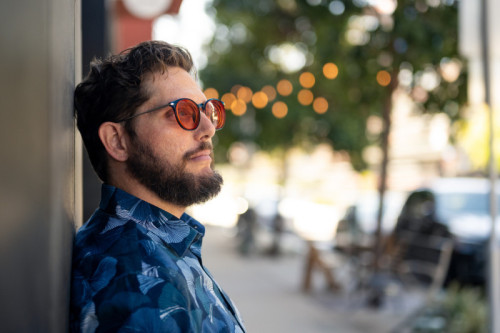
- After Surviving Battle With Hep C, Alumnus Now Helps Others Do SameRichard Jaenisch had received a death sentence at age 12. Diagnosed with hepatitis C, very unusual for a child that young, Jaenisch had been told by doctors that if he didn’t get a liver transplant, he wouldn’t live past 30. That disturbing prediction had hung over his adolescence and early adulthood like a black cloud, casting a pall over every doctor’s appointment and health episode. Now here it was, 2016, the year when Jaenisch turned 30, and the doctor’s assessment was feeling eerily prescient. He had not been able to procure a new liver, and his condition was deteriorating rapidly. To borrow his gallows humor, he was as “yellow as a Simpsons character” because of jaundice. He collectively spent more than six weeks in the hospital as a result of various complications from end-stage liver disease. “Every single day that year, I had a 30 to 60 percent chance of dying,” Jaenisch said. That he didn’t die, that he received a liver transplant on Dec. 3 (only a few months before his 31st birthday), Jaenisch considers to be nothing short of a miracle. Given the gift of fresh life in his fourth decade, he elected to devote it to ensuring that no one else has to go through the ordeal that he did. Three years later, Jaenisch returned to Cal State San Marcos – the university where he had earned a bachelor’s degree in social sciences in 2008 – to pursue a master’s in public health. He now works as the director of education and outreach for Open Biopharma Research and Training Institute, a Carlsbad nonprofit whose mission is to reduce the cost of pharmaceuticals like the ones that helped keep him alive while he waited for the miracle liver. More significantly, Jaenisch is a tireless patient advocate, dedicating countless hours to multiple organizations that share a goal of ending the scourge of hep C. He has transformed adversity into community impact, leveraging his CSUSM education to improve lives and strengthen public health across the state. “Richard is truly a special person,” said Carrie Frenette, the executive director of global medical affairs for Gilead Sciences and Jaenisch’s liver doctor for nine years starting in 2012. “I can’t think of anyone else who has so much expertise and understanding in their medical problems, advocates for themselves and then goes on to advocate for others. Honestly, it made it so easy to care for him, and it made it mean even more when he got his transplant and was healthy again.” 'I don’t know how you are still alive...’ It all started with brown pee. Jaenisch was a normal suburban kid growing up in Rancho Bernardo. When he was 12, his parents signed him up for a summer tennis camp. It was a sweltering day and he didn’t drink a lot of water; when he returned home and went to the bathroom, his urine was dark. His father took him to Rady Children’s Hospital, where he was put through a battery of tests on his kidneys, spleen and liver. The diagnosis of hepatitis C virus (HCV) stunned them, as did the subsequent wallop of bad news: After the rest of the family was tested, it was discovered that he contracted the infection at birth from his mother, who also was found to have HCV. Nothing, though, could have prepared Jaenisch for the haunting prognostication of liver transplant or death. “That shook me to my core,” he said. “My childhood was fundamentally changed. And my mom heard that, too, because she was in the room. It’s awkward hearing your own future from your child’s diagnosis. We shared a very odd relationship in that way.” At the time, in the late 1990s, there was no cure for HCV, only experimental treatments with low success rates and punishing side effects. Jaenisch’s mom started the drugs – interferon and ribavirin – almost immediately, but as a child, Jaenisch wasn’t eligible. The primary impact of HCV on his teenage years was that he was forced to cease participation in all sports and PE classes (because the disease can be transmitted through blood) and he began to suffer from a type of brain fog named hepatic encephalopathy (HE). After graduating from Rancho Bernardo High School, he attended Palomar College for two years, then transferred to CSUSM. There, he threw himself into classes in economics, history and political science – not only to satiate his hunger for knowledge but also to distract himself from the fear that constantly lingered at the back of his mind. “I wanted to live as much of my life as I could before everything hit the fan,” Jaenisch said. “Because I knew what was coming. When someone gives you a death sentence, you remember it, to say the least.” Jaenisch graduated from CSUSM in December 2008. Only a few weeks later, the trouble started. He attempted to begin the same treatment program his mom had undergone, but because of denials by his mom's employer, he wasn’t able to do so for about nine months. Once the snags finally had been resolved, the 12-week regimen of interferon and ribavirin didn’t work. He experienced all the negative effects of the drugs – in his case, painful inflammation and wild emotional swings – without any decrease in his body’s viral load. A second round at double the dosage early in 2010 similarly yielded no response. By this point, more than a decade after his HCV first had been discovered, Jaenisch had descended to the most serious stage on the scale that measures liver fibrosis, or scarring. F0 equates to no fibrosis, F1 is mild, F2 is moderate, and so on. He was at F4, which indicates the presence of cirrhosis, a condition in which the liver is extensively scarred and permanently damaged. Jaenisch had reached the dreaded end-stage liver disease, which essentially meant that the ticking of his clock was only accelerating. All the while, he was encountering roadblocks in his career. He had hoped to enter the niche field of traffic economics, but graduating into the Great Recession scuttled that plan. For a time, he held a job in tech support that he found unfulfilling. The work that did bring Jaenisch joy was for a group that offered before- and after-school services for elementary and middle schools in the Poway district of his youth. He envisioned a long-term future in that field but was stymied by both the ailing economy (which led to layoffs) and his illness (he claims he was a victim of disability discrimination but chose to spend his remaining time trying to get better rather than pursue a case.) While he tried to piece together enough work to retain his vital health insurance, Jaenisch’s health continued to deteriorate. In 2014, two years into her stint as his liver doctor, Frenette proffered a grim evaluation. “She said, ‘I don’t know how you are still alive with this liver,’ ” Jaenisch recalled. “She showed me pictures and was like, ‘Your liver is an old shoe. It is not doing what it’s supposed to do. But you’re still functioning.’ ” Every moment of optimism, it seemed, was followed by a stroke of misfortune. He began taking a new drug called Sovaldi (a direct-acting antiviral, or DAA) that was considered a game-changer for HCV patients in that it had an 86% cure rate in six months. Sure enough, Jaenisch’s viral load was approaching zero and his liver was curing. But then he contracted a C. diff bacterial infection (the suspect: spoiled food from a restaurant), which caused acute liver failure and brought his HVC roaring back. He later tried another second-generation DAA – Harvoni – that sounded promising but failed in the last week of treatment. As his liver continued to deteriorate, in 2016 he became too sick for treatment and, following a now-common hospitalization, an ER physician gave him outdated medical advice, which resulted in a case of sepsis that nearly killed him. End-stage liver disease is typically a rapid descent lasting as little as two years. For Jaenisch, it was an eight-year slog, from age 22 to 30. “He was in and out of the hospital multiple times, and he nearly didn’t make it to transplant multiple times,” Frenette said. “I can’t imagine anyone going through it with the courage and strength that he did.” Even after the liver transplant, Jaenisch wasn’t out of the woods. The operation addressed the issue of the failing liver, but it didn’t eradicate the HCV (the virus lives in the bloodstream). Frenette advised a treatment plan of Sovaldi, Zepatier and ribavirin, and that pharmaceutical concoction proved to be a magical formula. In September 2017, 18 years after the fateful diagnosis, Jaenisch was cured. “Honestly, I cried,” Frenette said. “He had been through so much, and to finally get rid of this awful virus that he had lived with his entire life and had caused his liver to fail … I don’t have words.” ‘I have to be more than a self-advocate' It was during one of his dozens of hospital stays that Jaenisch decided on the next course of his life, provided he would live long enough to choose. In the fall of 2014, he had been admitted to Sharp Memorial Hospital after the HCV returned via his C. diff infection. His medical team was struggling to lower his levels of bilirubin, a substance found in bile that was causing jaundice, the yellowing of the skin now so familiar to Jaenisch. He knew that ultraviolet rays help break down bilirubin, so he convinced the nurses to bring him outside for an hour a day at peak sun. As he had theorized, his bilirubin numbers declined. “It was at that point where I was like, ‘I have to be more than a self-advocate. If I can survive through transplant, I need to go to a Master of Public Health program,’ ” Jaenisch said. “I realized that that path would help me better understand how to become an advocate not only for myself but also for others.” His commitment would be nurtured in an environment like CSUSM, as he was accepted into its accelerated MPH program. His time back at the university overlapped with the pandemic, which he took advantage of by choosing as his thesis topic the emergency use authorization of COVID-19 tests. “He was very inquisitive and passionate,” said Asherlev Santos, an associate professor of public health and Jaenisch’s thesis adviser. “Sometimes that passion was more visible than the evidence of the inquiry, but all came from a place of helping others in some sort of need. He used his personal and professional experience to spur on what he did for his MPH degree.” His master’s allowed him to land his job at Open Biopharma, but it’s passion that mostly fuels Jaenisch in his advocacy connected to HCV. In 2016, while his body was still racked with the disease, he traveled to Sacramento with an organization known as CalHEP to talk to state legislators and raise awareness about viral hepatitis. The next year, when Congress was preparing to vote on a bill to repeal the Affordable Care Act, Jaenisch enlisted in the fight. He told his story of overcoming HCV in half a dozen TV interviews, worked at a call center, wrote letters – he did so much that the American Liver Foundation named him its liver champion of the year. “I wanted to preserve the things that help people get access to health care,” he said. “Because to me, it saved my life.” He also has volunteered for state and local groups such as End the Epidemics, the California Department of Public Health and the Eliminate Hepatitis C San Diego County Initiative. Their shared objective (in line with a goal established by the World Health Organization) is to eliminate hep C by 2030, which means a reduction of new infections by 90% and deaths by 65%. And the barriers are much lower than they used to be. Jaenisch says his family spent hundreds of thousands of dollars on treatment and other expenses to keep him alive. Today, treatment could run as cheap as a few hundred dollars, and that’s for more effective drugs, too. “I was raised in a middle-class suburban household, and I wouldn’t have known I had hep C if I didn’t pee a brown color,” Jaenisch said. “I’ve always maintained that I think we’re missing a lot of people, and I keep trying to push for us to find them and knock this virus out. We’re taking a lot of steps, and eventually we’ll get there.” Thanks to Jaenisch’s focus on access and innovation, those steps are becoming strides – toward a healthier, more equitable future for all. Media Contact Brian Hiro, Communications Specialist bhiro@csusm.edu | Office: 760-750-7306