




Following the end of Cal/OSHA’s COVID-19 regulations today, the requirements for reporting positive cases and notifying exposures in the workplace will cease. As a result, CSUSM will no longer report positive cases, conduct contact tracing, maintain the COVID-19 website or send exposure notifications.
Effective today, individuals who test positive for, have been exposed to or show symptoms of COVID-19 will no longer be required to submit a report.
If you feel unwell with flu- or cold-like symptoms, please stay home, take necessary precautions and seek guidance from a health care provider. Applicable policies and guidelines will be updated based on the latest public health recommendations to ensure the safety of our campus community.
We appreciate your continued cooperation and flexibility throughout this time and thank you for helping us prioritize the health and safety of everyone on campus.
Visit the Safety, Health and Sustainability website for health and safety reminders or contact us with questions at shs@csusm.edu.
Latest News Release
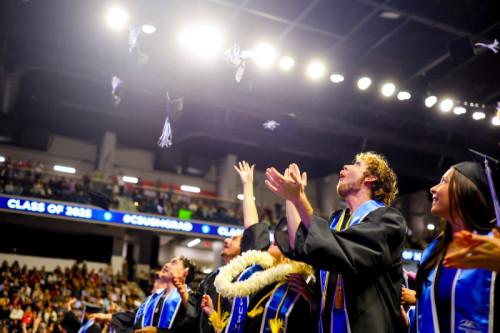
- More Than 1,000 Graduate as Fall Commencement Moves to New VenueMore than 1,000 students graduated as Cal State San Marcos held its third annual fall commencement on Monday – this time in a new venue to accommodate the growing ceremonies. A total of 1,040 graduates crossed the commencement stage as the event moved from the Sports Center on campus to Frontwave Arena in Oceanside. Fall commencement has doubled in size since it debuted in 2023, as CSUSM remains the only public university in San Diego County to hold graduation at the midpoint of the academic year. The event Monday was divided into two ceremonies. The afternoon ceremony featured 604 graduates from the College of Humanities, Arts, Behavioral and Social Sciences, and the College of Science, Technology, Engineering and Mathematics. The evening ceremony included 436 graduates from the College of Education, Health and Human Services, and the College of Business Administration. “I always say that I learn from our students more than I could ever teach them,” CSUSM President Ellen Neufeldt told the graduates. “I know without a doubt that our world needs your perspectives, your ideas, your passion and intellect, and your spirit of resilience. As you move forward, know that you are equipped and destined for greatness. Hold on to the feeling of this moment and take it with you wherever you go next.” CSUSM holds fall commencement to offer students who are graduating in December the opportunity to celebrate their accomplishments with their families without having to wait until spring. Commencement is an especially important milestone for the more than half of graduates at CSUSM who are the very first in their families to earn a bachelor’s degree. The new graduates join a distinguished group of more than 72,000 CSUSM alumni and more than 4 million California State University alumni. Nearly half of all bachelor’s degrees in California are awarded by the CSU. At CSUSM, students are prepared for in-demand careers in health care, education, business, biotechnology and public service – fields that power the region and state. Learn more about CSUSM’s economic impact.
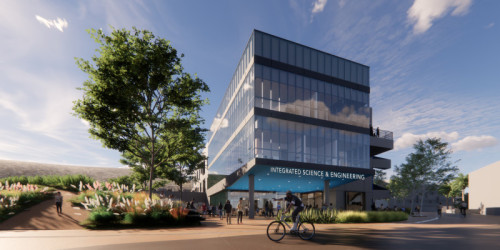
- Looking Back on Successes of 2025As the end of the year approaches, many are already looking ahead to 2026. But before putting the finishing touches on your list of New Year’s resolutions, let’s take a look back at some of the most-talked-about stories of 2025. Hunter Industries Gives Transformational $10M Donation for ISE Building In September, CSUSM announced a transformational $10 million philanthropic investment from Hunter Industries, one of the largest gifts in university history. The donation is supporting the construction of CSUSM’s new Hunter Hall of Science and Engineering, a cornerstone of the university’s commitment to preparing the next generation of engineers and scientists. Perfect Chemistry: Campus Wedding 16 Years in the Making If getting married at one’s place of employment seems unconventional, it shouldn’t to those who know biology professor Elinne Becket and chemistry professor Robert Iafe. The passion they have for their students is the same passion they have for the university, so it makes sense that the tied the knot on campus at the McMahan House on campus. CSUSM Kicks Off Historic $200 Million Fundraising Campaign Through the largest fundraising campaign in university history, CSUSM is aiming to raise $200 million to support student success and power the region’s future. The university officially launched its “Blueprint for the Future” campaign on Sept. 19. It’s an effort that combines philanthropy with grants and research funding. The campaign’s theme reflects both the physical growth on campus and the forward momentum building at CSUSM. Professor Elevates Samoan Language, Culture as Consultant for "Moana 2" Professor Grant Muāgututiʻa never could have dreamed that linguistics would take him to the shores of Oʻahu as he rubbed elbows with Dwayne “The Rock” Johnson and other stars of the Disney glitterati before the world premiere of the animated film “Moana 2” in 2024. Indeed, Muāgututiʻa was more than a little caught off guard when the filmmaking team behind the sequel to the wildly popular movie “Moana” from 2016 contacted him out of the blue two years ago. Construction of New Wellness and Rec Center Underway CSUSM held a Construction Kickoff on Nov. 12 to celebrate construction being underway for the Student Wellness and Recreation Center (SWRC), which is expected to open by summer 2027. CSUSM is partnering with Sea Breeze Properties – developers of North City, which includes CSUSM’s North Commons, The QUAD and the Extended Learning Building – on the SWRC, which will be the latest addition to campus life. Faith, Resilience Help Athlete Through Life-Threatening Crisis It all started with a headache. A seemingly normal ailment, but Malachi Wright doesn’t get headaches. And he definitely doesn’t get headaches that force him to leave work early or have him confined to the couch and throwing up for three straight days. That's when his mom, Ivonne Mancilla, knew this was something more. Wright spent the next 40 days in the hospital, undergoing three brain surgeries with no idea what the future would bring. But Wright defied all odds. Alumna Finds Purpose in Advocacy for Native Children and Families As Maya Goodblanket reflects on her time as a student, she vividly remembers the day she found the California Indian Culture and Sovereignty Center at Cal State San Marcos. Little did she know that she was meeting mentors that day who would help her achieve the career she has today. Goodblanket, a member of the Cheyenne and Arapaho Tribes of Oklahoma, serves as an Indian Child Welfare Act court advocate for the Valley Center-based Indian Health Council, which provides health and wellness services for American Indian communities in north San Diego County. Ask the Expert: A Scientific Perspective on the L.A. Fires When the hills above Los Angeles exploded in flames early last month, Matt Rahn snapped into action. Rahn, though, isn’t a firefighter who was called into duty to help battle what became one of the biggest and most destructive fires in California history. Rather, he’s a wildfire researcher at Cal State San Marcos who, in 2019, created a unique degree program called Wildfire Science and the Urban Interface. He’s also the executive director of the Wildfire Conservancy, a nonprofit research foundation dedicated to serving the state’s firefighters and protecting its communities. Cougar Care Network Marks 10 Years as a Campus Hub for Connection Built on listening first and guiding without judgment, the Cougar Care Network enters its second decade as a trusted stop for students seeking practical help, community and a path forward. The Cougar Care Network (CCN) launched in fall 2015 as part of Cal State San Marcos’ Early Support Initiative within the Student Outreach and Referral (SOAR) program. Chronic Illness a Journey of Strength, Self-Discovery ... and Salt The first time Emmi van Zoest rode in an ambulance was in May 2024. She was in the middle of her 10:30 a.m. Communication 200 class when she realized her vision and hearing were failing. She couldn't keep her legs or arms straight and she couldn’t speak. The full memory is hazy, but she found herself sitting outside of Crash’s Market in the University Student Union with a handful of salt packets and on a Facetime call with her parents, who live in Tennessee. This experience didn’t come out of nowhere. She has postural orthostatic tachycardia syndrome, or POTS, a chronic condition that she has lived with since her junior year of high school. Media Contact Eric Breier, Interim Assistant Director of Editorial and External Affairs ebreier@csusm.edu | Office: 760-750-7314
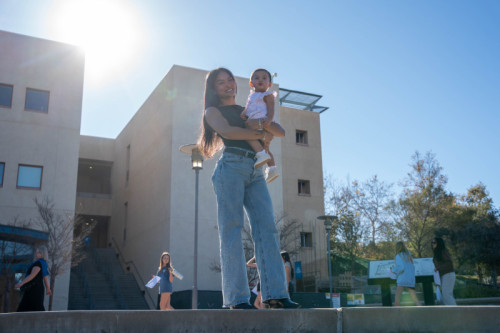
- Labor of Love: New Mom Graduating EarlyThis week, Cameron Aquino will finish her seventh and final semester at Cal State San Marcos, having graduated a semester early with a Bachelor of Arts in psychological science. Barring a disastrous outcome of her finals, she will finish as a member of the College of Humanities, Arts, Behavioral and Social Sciences dean's list in six of her seven semesters. And the one semester she didn’t earn it – fall 2024 – she was a bit preoccupied by having a baby. “And I was really close,” she said of her near-perfect dean’s list record. Aquino will walk in fall commencement at Frontwave Arena in Oceanside during the CHABSS ceremony next week, knowing that she accomplished her goals while allowing nothing to get in the way of her path. And her life journey has been winding. Born in Guam, Aquino has lived in Kentucky, Germany and California. She resided in Germany with her parents after her high school graduation before returning to the U.S. and beginning her undergraduate studies. She maintained the life of a normal college student, working and earning exceptional grades while living with her boyfriend and his family. Then came the surprise. While some students will naturally take a break – her mom was a college student when she got pregnant with her and her brother and never returned to finish her degree – Aquino was determined to not let baby Phoenix be the reason for her slowing down her journey. “Since finding out I was pregnant, I knew I wasn’t going to fall,” she said. “I knew I was going to keep going.” In fact, the preparation and ensuing birth of Phoenix, who turned 1 in November, drove Aquino to quicken her pace. To reach higher to prove to herself, her daughter and her support system that she can accomplish anything. Her near-perfect placement on the dean’s list and overall GPA of 3.67 says otherwise, but it wasn’t easy. “It was a lot of planning,” said Aquino, who commuted from Murrieta throughout her time at CSUSM. “I went through the previous semester and the whole fall semester pregnant, so I had to plan ahead for a lot of things like taking exams early and completing homework assignments early to give myself a cushion. It was a lot of planning with logistics, but I think we made it work.” After the arrival of Phoenix – Aquino wanted a unisex name for a girl just like her own – she went to school mostly in the mornings while her boyfriend attended in the evenings. Gabriel Madrigal is an accounting major who plans to graduate in May. They received help from his parents as well as friends. Aquino is also quick to point out how much CSUSM faculty has helped her in various ways. In particular, Kathie Sweeten, a lecturer who taught an infant and childhood development course while Aquino was pregnant, was influential. Lecturers Neal Dykmans (psychological science) and Melissa McGuire (history) went a long way toward providing an understanding environment. Exactly one week after giving birth, she returned to campus to take a history final. Within days of finishing her finals, she took classes in the subsequent winter session. Aquino said she derives her strength and dedication from her parents. “I get opportunities they never got to pursue higher education,” she said. “Now that she’s born, I want to provide her a better life and a better future than even I had.” Aquino plans to apply for the new Master of Science in clinical counseling psychology program that will start next fall. She has talked to psychological science professors Lisa Graves and Francisco Flores Ramirez about graduate school as she charts a course to eventually earning a Ph.D. in neuropsychology. She wants to work with military veterans. Her parents are coming from Germany to share in her celebration on Monday. Her brother had a baby just last week and he’ll be there, too. Madrigal and his family also will attend. The marking of the moment will be large, no doubt. But to Aquino, there was never an option of not finishing at the highest level she possibly could. “I feel very proud,” she said. “But I also feel like it’s doable. Life just kept throwing things at me left and right all throughout my college years. But it’s nothing you can’t get past or you can’t overcome. It’s just life, and it happens. You take it and you adapt and you do your best with it. “It’s the system of values I’ve had my whole life. No matter how hard it is, life just keeps moving. You’ve got to move along with it.” Media Contact Eric Breier, Interim Assistant Director of Editorial and External Affairs ebreier@csusm.edu | Office: 760-750-7314
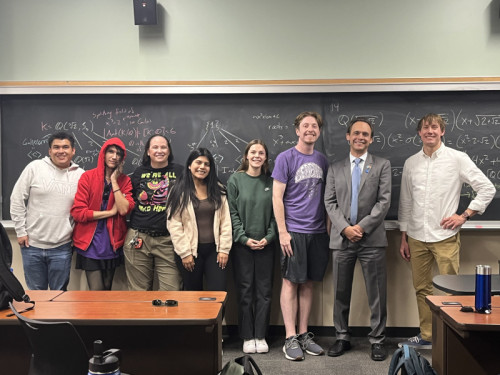
- CEO’s Classroom Experience, Family Legacy Fuel $10M Gift For Hunter HallGreg Hunter never wears a suit to his abstract algebra class at Cal State San Marcos. So when he walked in dressed up one evening, his classmates teased him for being “all dolled up.” Few would guess that he is the CEO of Hunter Industries, a global organization and the largest private employer in San Marcos – or that the company is also a longtime philanthropic partner to CSUSM and is recognized on the campus founders’ seal. To them, he’s just Greg, a student who slips into class with the ease that comes from sharing four semesters with his classmates. “Greg is effortlessly humble, which is so refreshing,” fellow student Travis Bourdon said. “We knew he was a professional but had no idea of the scope. He fits right in, has made friends and encourages us to think about complex concepts differently.” A lifelong learner and Cornell University graduate, Hunter enrolled at CSUSM to challenge himself and strengthen his analytical skills. But the experience quickly became something more as he found himself inspired and motivated by the students around him. “Their grit, backgrounds and excellence impress me, as does the passion and engagement of the faculty,” Hunter said. “CSUSM is a special place with a clear commitment to advancing social mobility and student success across the region. It means a great deal to continue my family’s legacy of support.” This experience, combined with the family’s longstanding commitment to CSUSM, inspired a transformational $10 million gift to fund a new STEM facility. Recently approved by the CSU Board of Trustees, the building will be named Hunter Hall of Science and Engineering and is scheduled to open in fall 2027. Hunter Hall will boost engineering enrollment from 500 to nearly 2,000 students, strengthen the region’s workforce pipeline and support economic growth. “We are deeply grateful to the Hunter family and Hunter Industries for this extraordinary gift,” President Ellen Neufeldt said. “Greg’s experience in the classroom gives him a unique perspective on our students, many of whom are the first in their families to graduate from college. Hunter Hall will be a landmark addition to campus, providing state-of-the-art STEM facilities, fueling regional innovation and strengthening pathways for future graduates.” The Hunter family has helped shape CSUSM’s history for three generations – including Greg’s grandparents, parents and aunt, Ann Hunter-Wellborn, who served on CSUSM's University Council before the campus was founded and has continued to advocate for many student success programs. Over the years, Hunter Industries has supported several pivotal projects, including the Clarke Field House, University Student Union, Hunter Design Lab and state-of-the-art physics laboratories. The company also provides internships, mentorship and faculty support, and employs many CSUSM alumni. As for balancing coursework and running a global company, Greg approaches his studies with the same focus and dedication that define his leadership. “Greg is an exceptional student,” mathematics professor Hanson Smith said. “He even makes time for office hours, which is remarkable for someone who is also a CEO. Students are typically career-focused. Greg already has an extraordinary career, yet he’s here because he loves learning, which is likely what makes him such an effective leader.” With the Hunter gift, CSUSM’s “Blueprint for the Future” campaign – the university’s most ambitious fundraising effort – has raised nearly 80% of its $200 million goal. The campaign reflects the university’s continued growth and its commitment to advancing social mobility across the region. Explore Blueprint for the Future to see how CSUSM is different by design. Media Contact Eric Breier, Interim Assistant Director of Editorial and External Affairs ebreier@csusm.edu | Office: 760-750-7314
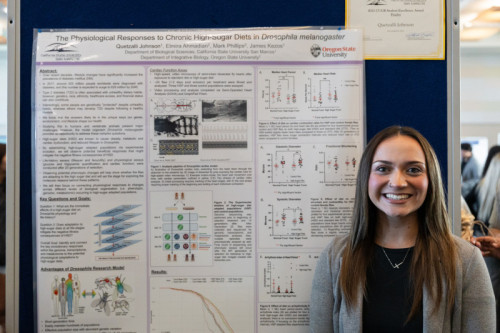
- Finding Growth Through Patience, Campus InvolvementUnlike most children, Quetzalli Johnson wasn’t afraid of visiting the dentist. When she was growing up, her mother always made dentist trips a positive experience for Johnson and her brothers by offering them rewards for doing well in the office. Those positive childhood moments led Johnson to dream of working in health care and dentistry. Today, Johnson is one step closer to fulfilling that dream. “I’m so excited. I feel like the finish line is right there,” said Johnson, a fifth-year general biology major and pre-dental student who's graduating from Cal State San Marcos this month. “I’m really excited to navigate the world outside of school, spend time with my family and husband, and start working as a dental assistant during my gap year.” Along with a gap year to gain experience, Johnson plans to move to North Carolina with her family. She hopes to attend her top choice, the University of North Carolina, to study dentistry and become a dentist. Johnson was an active member of the Pre-Dental Society at CSUSM. She joined the campus organization in spring 2024 and became the social media officer during the 2024-25 academic year. Her efforts in the club helped her achieve the role of senior president this fall. “Being a part of that club taught me a lot about confidence and allowed me to be really comfortable speaking with other students,” she said. “I loved the leadership roles because of what they brought out in myself, and I loved being able to help and support others.” Not only did the Pre-Dental Society give Johnson a place where she belonged, but it also helped her understand the path to dental school. As club president, Johnson has tried to make clear to newer members that they should take their educational journey at their own pace. She often talks about her experience as a fifth-year student and how that extra time has benefited her academically. “I feel like a lot of members think they need to graduate within a certain time, because in high school that’s what we’re told,” Johnson said. “We’re told, ‘You have to graduate college in four years,’ and sometimes that can be a little discouraging. I think it's nice for the members to hear that I’m a fifth-year and see that I’m not defeated by it. I’m enjoying the ride.” Johnson also works hard to make the Pre-Dental Society a welcoming place for students. She encourages members to ask questions, informs them about volunteer opportunities and helps them connect with academic resources and see what lies ahead on the path to dentistry. Her passion for creating and fostering a loving environment is evident to her peers and professors. James Kezos, an assistant professor of biology, has worked closely with Johnson in the classroom and lab. “She is a very determined, hard-working and compassionate individual who has set high goals for herself,” Kezos said. “She is willing to learn and help with any task, showing exceptional levels of initiative and dedication. She excels at whatever responsibilities she undertakes, including her classwork, her research and her extracurriculars such as being president of the Pre-Dental Society.” In the Fly Lab with Kezos, Johnson began studying the physiological adaptations to chronic high-sugar diets in Drosophila (fruit flies) and how these diets affect their heart health and lifespan. Johnson explained that because Drosophila share many genetic traits with humans and have such a short lifespan, they’re ideal subjects for biological study. Alongside the study on high-sugar diets, Johnson has analyzed the Hedgehog signaling pathway in Drosophila heart function. “If we’re discovering new things that could help someone else’s future research, if it could be applied in any way and help the human population, I think that’s really neat,” Johnson said. “I love that we’re taking steps forward to potentially help people. That’s what I want to do in my future, help people.” As the Fly Lab’s sole data analyst, Johnson works closely with the flies’ heartbeats – noting that, in some cases, the flies have a fluorescent heart – by watching videos and turning that information into data through programs like Microsoft Excel. “The biggest impact she has made has been her efforts in implementing a large statistical code to process and analyze our fly cardiac videos,” Kezos said. “Without her help, we would not be able to analyze any of our data, and probably would be struggling with fixing the code.” Creating the code was a challenge that Johnson felt confident in tackling. She had data analysis experience from EOS Fitness, where she worked as a data coordinator. She also took a class on biological data analysis, so when Kezos mentioned that he had code that needed fixing, Johnson was quick to take on the project. It took Johnson roughly two months to go through the nearly 3,000 lines of code. She watched thousands of videos, quantified the data and made it possible for the lab to analyze all of their hard work. Johnson referred to the project as the ultimate puzzle. “It was so frustrating but also really rewarding,” she said. “That went beyond what I thought I was capable of, and just having the belief in myself that I could achieve that, it was such a rewarding feeling. It also strengthened my confidence in myself; I am capable of doing something like that. That was super empowering for me.” Johnson has used these new skills to teach other students in the lab how to use the code to analyze data. “Quetzalli has been an integral member of my lab, and has been a tremendous help in establishing the data analysis process,” Kezos said. “Without her efforts, initiative and care, we would not be as productive as we are today.” When looking back on her time at CSUSM, Johnson said her biggest advice for future students is to get involved. Transferring from Palomar College, Johnson thought she could handle everything on her own at CSUSM. She wasn’t thinking about joining clubs or finding community. But as she delved deeper into her coursework, she realized there was much she still needed to learn about the path ahead. She first heard about the Pre-Dental Society in a Biology 101 class, and the timing felt right. She decided to go to a meeting, and the organization ended up giving her the guidance and support she hadn’t realized she was missing. “I attended a meeting and thought, ‘This is so helpful,’ ” Johnson said. “Then, while I was at these meetings, I saw this community and the relationship between officers and members. I was like, ‘I really want to be a part of this,’ which was new for me. I had never felt like that before.” Being a member of the Pre-Dental Society and volunteering with the Fly Lab helped Johnson grow as a student. The knowledge she gained from both, combined with community support, helped her see how she could give back. Johnson’s newfound desire to get involved led her to participate in events such as the Student Poster Showcase. She presented a poster on the physiological responses to chronic high-sugar diets in Drosophila, the research she had done in the Fly Lab. “Get involved, because it doesn’t hurt; it only helps. You build such a great community and you learn so much. You’re able to meet like-minded people and grow as a human being,” she said. “Enjoy the ride. Enjoy where you’re at in the moment. Enjoy the people around you. Slow down and just enjoy where you’re at.” Media Contact Eric Breier, Interim Assistant Director of Editorial and External Affairs ebreier@csusm.edu | Office: 760-750-7314
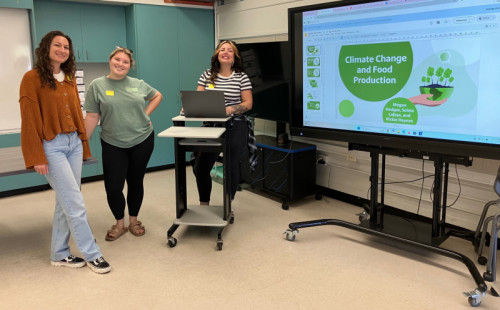
- Climate Action Lesson Connects Students With Young LearnersCal State San Marcos students brought climate action education into a rural sixth-grade classroom through a hands-on lesson focused on food systems and sustainability. The project grew out of Women’s, Gender and Sexuality Studies (WGSS) 304: Ecofeminism, taught by lecturer Kit-Bacon Gressitt. Gressitt incorporated the lesson plan assignment with support from the university’s new Climate Action Sustainability Center, an offer she said she “pounced on.” “Two students jumped on board, Rickie Haynes and Soleia Lafaye, and they dug into the project – much deeper, ultimately, than they originally expected. It was a lot of work,” Gressitt said. Students in the class Education 350: Foundations of Teaching as a Profession were looped into the project through Paula Hewitt, a Distinguished Teacher in Residence at CSUSM. One of Hewitt’s students, Megan Hedges, joined Haynes and Lafaye in the project. The class partnered with Vallecitos Elementary, which Gressitt said was an easy choice given her connection to the school over the past 12 years. “It’s a wonderful, Title 1 school in a rural setting, serving preschool through eighth grade,” Gressitt said. “The school’s sense of community and collaboration is strong, and Superintendent Meliton Sanchez and sixth-grade teacher Jessica Mentze welcomed our students and their project enthusiastically.” Title 1 schools receive federal funding to support students from low-income communities. The lesson introduced sixth-graders to the climate impacts of global food supply chains and offered an adaptive action: growing your own food to reduce greenhouse gas emissions. The CSUSM students guided the class in planting lettuce seeds to take home and helped them map the origins of their favorite foods. “Watching the sixth-graders ask and answer questions while planting lettuce to take home to their families was a joy,” Gressitt said. “They quickly grasped the differences between having a family garden and the climate pollution that results from shipping produce around the globe. “The most revealing evaluation of the students’ work is that the Vallecitos folks were pleased with the lesson and invited CSUSM back next semester.” Media Contact Eric Breier, Interim assistant director of editorial and external affairs ebreier@csusm.edu | Office: 760-750-7314