






09
December
2025
|
09:42 AM
America/Los_Angeles
By Brian Hiro
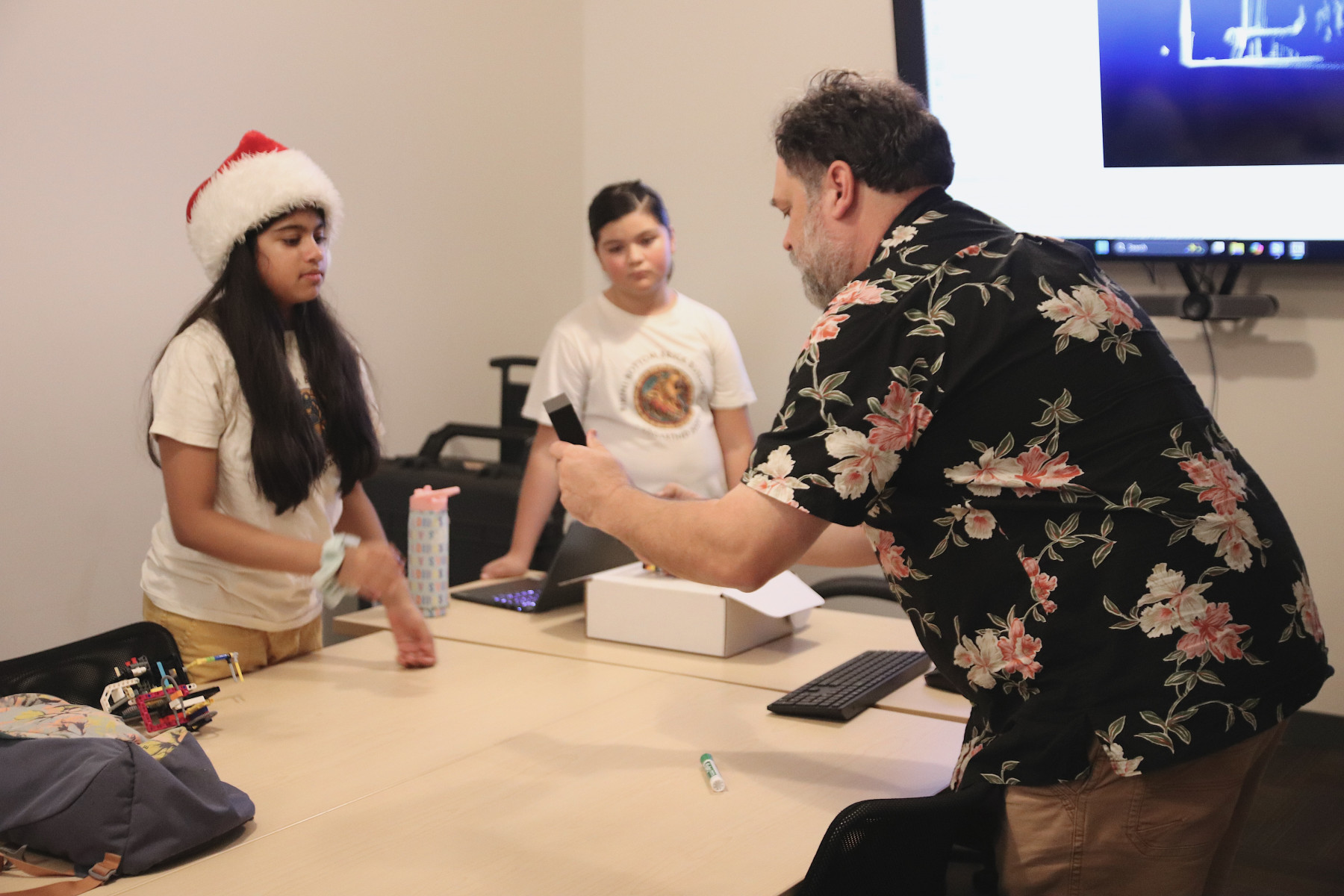
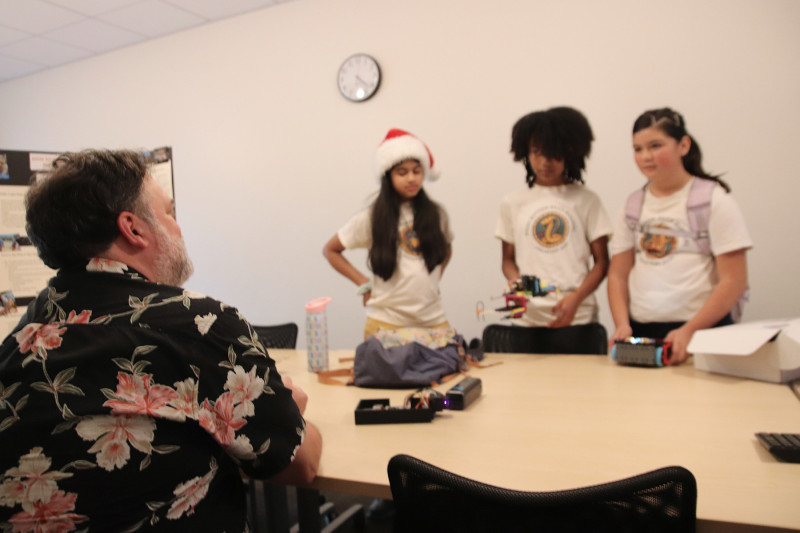
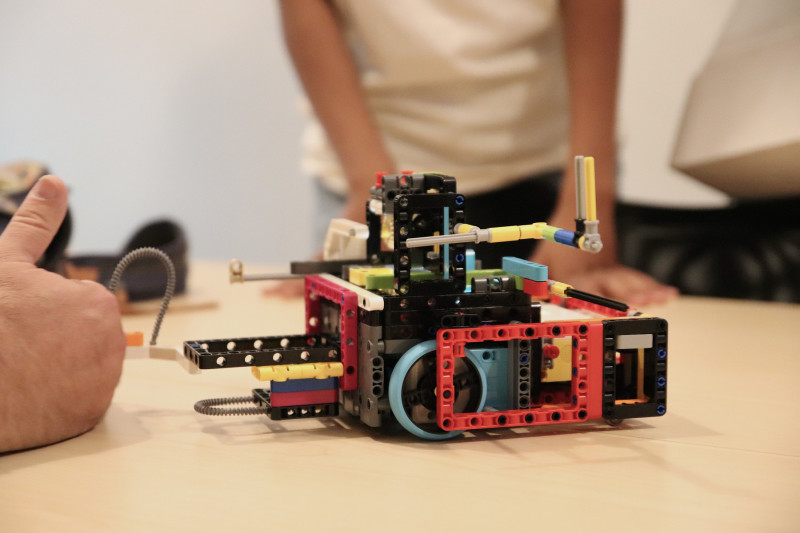
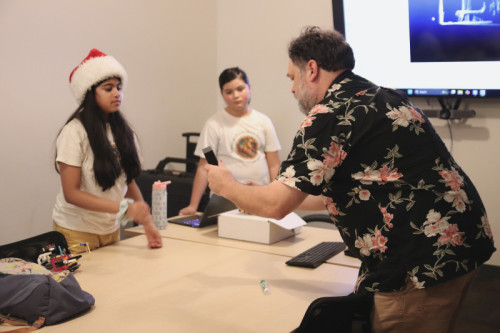
Archaeology professor Jon Spenard met last month with a team of students competing in the FIRST Lego League Challenge. Photo by Tim Meehan
"; items += "
"; items += "
"; items += "
" + val['title'] + "
"; if(val['subtitle']){ items += "
" + val['subtitle'] + "
"; } items += "
"; if ((val['showpublishdate'] !== 0 && showPublishDateHeadlineSetting) || showPublishCityHeadlineSetting) { items += '
'; if (val['publishcity'] && showPublishCityHeadlineSetting) { items += '
' + val['publishcity'] + '
'; } if (val['showpublishdate'] !== 0 && showPublishDateHeadlineSetting) { items += "
"; items += "
" + date_month + "
"; items += "
" + date_day + "
,"; items += "
" + date_year + "
"; items += '
'; items += ' | '; items += '' + val['publish_time'] + ''; items += 'America/Los_Angeles'; items += '
'; items += '
'; } items += '
'; } items += "
" + val['message'] + "
"; items += "
Read more
"; items += "
"; items += ""; items += tags_items; items += multimedia_count; items += "
Latest Newsroom
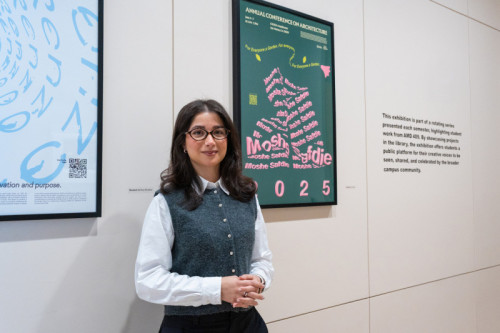
- New Gallery Showcases Student Art in LibraryThe event that inspired the class project was imaginary. But for Sonia Ellis and fellow Cal State San Marcos art students, the payoff was very real. Last year, Ellis was a student in AMD 409: Advanced Graphic Design and Visual Arts, an upper-division class taught by Ghazal Foroutan. The assignment: Using only typography, create a promotional poster for a hypothetical California architecture conference being hosted by CSUSM. The twist: Some of the posters that resulted would be displayed as part of a new student art gallery in Kellogg Library. Ellis made a poster about acclaimed Israeli-Canadian-American architect Moshe Safdie, and hers was one of 19 selected for the exhibit. “I was thrilled and honored to have my work chosen to be displayed in the library and kept in the archive,” said Ellis, an art, media and design major who’s scheduled to graduate this spring. “It gave a greater sense of purpose to the project.” The 19 posters compose the first installment of the Cougar Gallery, which is located on the library’s second floor, occupying the wall space between the Makery’s entrance and the stairwell down the hall. Foroutan said the idea came from a conversation with fellow art, media and design professor Kristin Moss, and it was brought to fruition through a collaboration with multiple employees of the library: associate dean Char Booth, outreach librarian Irma Ramos Arreaga, arts and humanities librarian Torie Quiñonez, and administrative coordinator Arely Ayala. The initial exhibit has adorned the library’s walls since the start of the fall semester. “Seeing the students’ work displayed in a prominent campus space has been incredibly meaningful,” Foroutan said. “As a professor, I am proud to share their work with the broader campus community and to see it recognized by the department and the library. “For students, the exhibition validates their efforts beyond the classroom. Many have already photographed their posters and plan to list the show as a group exhibition on their CVs, as well as include the work in their portfolios.” The Cougar Gallery, Booth said, fulfills a longstanding desire to increase the presence and visibility of student art in the library. As a prominent display of creative student work, it joins the Data Stacks on the library’s fourth floor. "By establishing this new gallery, we are showcasing the creative talents of CSUSM student artists and designers and dedicating a highly visible area of the library to School of Arts students and faculty as a much-needed supplementary gallery space,” Booth said. Once she was assigned Safdie as her subject (other famous architects featured include Frank Lloyd Wright and Frank Gehry), Ellis set out to make a poster that would promote a hypothetical discussion with the architect at the conference while also channeling the style and philosophy of that architect. In researching Safdie’s life and work, Ellis was drawn to his design theory, “For Everyone a Garden.” “He envisions architecture as a living, evolving environment, integrating gardens and green space into almost all of his designs,” she said. “That phrase became my guiding concept and tagline for the poster, inspiring my color palette and imagery.” Ellis incorporated both physical art and digital design in the creation of her poster. She also designed an accompanying booklet in the same style as the poster to round out the promotional material. “Over the weeks of working on the project, we all watched each other's concepts evolve in the studio, so seeing them printed professionally and displayed in a space where so many students pass through was very meaningful,” said Ellis, who plans to apply for the CSUSM teaching credential program, with a goal of becoming an art educator. Foroutan hopes to work with the library to rotate the exhibition at least once a year to showcase as many as much student artwork as possible. “While the overall framework of the project will remain consistent, I plan to subtly revise the assignment each year to introduce new constraints, tones or conceptual directions, allowing the exhibition to evolve over time,” she said. Media Contact Brian Hiro, Communications Specialist bhiro@csusm.edu | Office: 760-750-7306
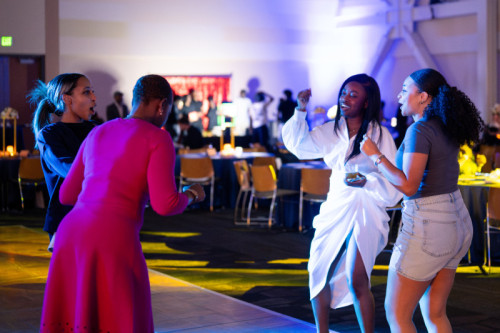
- Black Student Center to Host Monthlong Black Excellence CelebrationAs Cal State San Marcos commemorates Black Excellence Month, the Black Student Center will host a series of events to celebrate the brilliance and resilience across CSUSM through arts, education, student engagement and community fellowship. The monthlong celebration will conclude with the annual Black Excellence Gala on Feb. 27. Black Excellence Month Kickoff Feb. 2, 11:30 a.m.-2 p.m., USU 2310 The Black Student Center (BSC) will kick off the celebrations with a brief presentation discussing the history of the Pan-African flag, a raising of the flag and a live drumline performance. Food will be provided at the event, which is open to all students. Def Jam Open Mic Night Feb. 5, 5-7 p.m., USU Amphitheater The BSC, in collaboration with the Cross-Cultural Center, invites students to enjoy a night of poetry, spoken word and music. The event is open to all students. Professional Styling: How to Tie a Tie Feb. 9, 1-2 p.m., USU 4200 As part of the “My Brother’s Keeper” initiative, the BSC will host a session of professional styling to teach students how to tie a tie. The event is open to all students. Sista Fest Feb. 10, 5-7 p.m., USU 2310 In collaboration with the Women and Gender Equity Center, the BSC will host an event to celebrate Black women on campus. This year’s theme, “Rooted and Radiant,” is focused on providing mentorship to young Black women looking to navigate professional spaces. The keynote speaker is Wendy Stewart, MiraCosta College’s chief diversity officer. The event is open to all students. Black Jeopardy Game Night Feb. 13, 5-7 p.m., USU Ballroom Students are welcome to join the BSC for a night of culturally relevant games. Food will be provided on a first-come, first-served basis. Carnaval Feb. 18, 5-8 p.m., USU Ballroom Join the BSU and the Latinx Center for a celebration of dance and heritage from various communities across Latin America and the African diaspora. The event will feature live music, cultural foods and mask painting inspired by Rio de Janeiro’s Carnaval and New Orleans’ Mardi Gras festival. Ebony Fashion Show Feb. 20, 5-8 p.m., USU Ballroom The inaugural Ebony Fashion Show will provide a space for students to showcase their elegance on the runway. The event will highlight the creative expression of students across CSUSM student centers to showcase cultural displays through fashion. Black Org Fair Feb. 25, 5-7 p.m., Forum Plaza All students are invited to learn about the various Black student organizations at CSUSM. Representatives will be featured from various academic, social, faith-based and national Panhellenic Council organizations. 2/27 Black Excellence Gala Feb. 27, 5:30-8:30 p.m., USU Ballroom As the finale of Black Excellence Month, the BSC will host an inaugural event in collaboration with Tukwut Life to celebrate and highlight the Black community. The evening will showcase achievements and inspiring stories from the community, followed by a student performance and live DJ. Guests are encouraged to dress in their finest attire to honor the occasion and the remarkable accomplishments being celebrated. Media Contact Eric Breier, Interim Assistant Director of Editorial and External Affairs ebreier@csusm.edu | Office: 760-750-7314
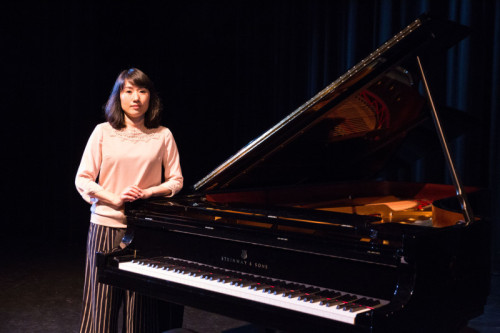
- Arts & Lectures Brings Music, Dance and History to CSUSMThe Arts & Lectures series returns to Cal State San Marcos this spring with concerts, performances and talks aimed at sharing music, dance, science and history. Events will take place across campus from January through April. All events are free for CSUSM students. Ching-Ming and Friends Chamber Concert Jan. 27, noon-1 p.m., Arts 111 Joined by CSUSM music professor Ching-Ming Cheng, the 11th annual Villa-Lobos International Chamber Music Festival will take place on campus to bring music composed entirely by Latin American composers. The program aims to celebrate Latin American chamber music across Southern California. CSUSM students: Free Faculty/staff/alumni: $5 Community: $10 Sponsored by the Funes Fund Gila Goldstein Piano March 10, noon-1 p.m., Arts 111 Internationally acclaimed pianist Gila Goldstein will perform a lunch-time recital on campus. The performance will include works by Vivaldi, Bach, Mendelssohn, Guastavino, Villa-Lobos, Lecuona, Ronn Yedidia and Gershwin. Before the event, there will be a piano master class on March 9 at noon in Academic Hall 104. CSUSM students: Free Faculty/staff/alumni: $5 Community: $10 Sponsored by the Funes Fund Stories From Home March 13, 6:30-8 p.m., Arts 111 “Stories From Home” is a series of dances embodying the oral traditions of Nuevomexicano, Chicano and Mexican American communities in the American Southwest. Choreographer Yvonne Montoya and a diverse cast of dancers draw upon personal histories as well as ancestral knowledge. The performance is a vessel for personal and specific tales, while also offering a broader look at various cultural traditions throughout the Southwest. An artist meet-and-greet will take place March 10 from noon to 1:30 p.m. at the Cross-Cultural Center. CSUSM students: Free Faculty/staff/alumni: $5 Community: $10 A Marriage of Art and Science: Entwined Research in a Nuclear Family March 23, 10:30 a.m.-1:30 p.m., USU Ballroom Art and science intersect with elin O’Hara slavick’s art, which maps radioactive residuum, and David Richardson’s epidemiological studies of radiation’s human impact. Slavick, who wrote “Bomb After Bomb: A Violent Cartography and After Hiroshima,” is an internationally exhibiting artist who captures the lingering effects of radiation with audiographs and creates contact prints of tree rubbings and architecture exposed to atomic bombings of Hiroshima, Nagasaki and Fukushima. Richardson, an epidemiologist who’s conducted studies of cancer among U.S. federal nuclear workers and Japanese survivors of the atomic bombings of Hiroshima and Nagasaki, is the lead writer on the United Nations Committee of Epidemiological Studies of Radiation and Cancer (UNSCEAR). CSUSM students: Free Faculty/staff/alumni: $5 Community: $10 Co-sponsors: Center ARTES STEAM ambassadors Peter Sprague Group Featuring Allison Adams Tucker March 24, 7-8:30 p.m., Arts 111 Masterclass 2:30-3:45 p.m. in Arts 111, open to the public Guitarist Peter Sprague loves jazz, but he also dips deep into musical history and unearths some sonic gems from the Beatles, Jimmy Webb and Antonio Carlos Jobim. For this concert, he connects with vocalist Allison Adams Tucker, pianist Danny Green, drummer Duncan Moore and bassist Mack Leighton for an evening of good sounds, good vibes and good times. The group recently released three albums: “All You Need Is Love” (Beatles), “Christmas Time Is Here” and “Peter Sprague Plays Jobim.” CSUSM students: Free Faculty/staff/alumni: $5 Community: $10 Veterans History Project II: The Journey Continues April 8, 5-8 p.m., USU Ballroom This event, which showcases recorded oral histories of military veterans, offers an intimate look into the personal experiences, challenges and triumphs of veterans from diverse backgrounds. Stories shared will be archived at CSUSM’s Kellogg Library and the U.S. Library of Congress, preserving their legacies for future generations. The keynote speaker will be Jim Gruny, a retired colonel in the Marine Corps. The formal program begins at 6 p.m., preceded by a reception and veteran resources and career fair. CSUM students/military-affiliated guests: Free Faculty/staff/alumni: $5 Community: $10 For more information, including ticket information, visit the Arts & Lectures series website. Media Contact Eric Breier, Interim Assistant Director of Editorial and External Affairs ebreier@csusm.edu | Office: 760-750-7314
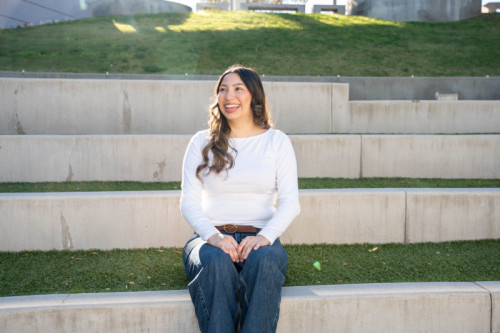
- Internships Help Shape Student’s Future in Public PolicyIlleana Carmona Chavez arrived at Cal State San Marcos certain she was headed for law school. But after she graduates with her bachelor’s in criminology and justice studies this spring, she will embark on a far different course, one that has taken her from student government to the governor’s office. The change in focus was shaped by her deep involvement in Associated Students, Inc., where she serves as the chair and chief of staff of CSUSM’s student government. Through ASI, Chavez joined Lobby Corps, an advocacy-focused volunteer group, and later traveled to Sacramento for the California Higher Education Student Summit, where she met with state legislators alongside students from across the CSU system. But the final realization of where her career was headed came from an internship opportunity. It was through ASI that Chavez met Zach Bunshaft, CSUSM’s director of government relations at the time. “Interning with Zach and seeing how higher education policies at the state level affected our campus was so impactful,” Chavez said. “These opportunities, being part of ASI and interning with Zach, changed the trajectory of my life and what I want to do.” CSUSM’s emphasis on internships proved transformational for Chavez. It not only prepared her for the professional world, it helped her discover the type of work that she’s truly passionate about. During her time as a government relations intern last spring, Chavez researched legislative officials to strengthen CSUSM’s advocacy efforts, engaged with policymakers at key events and explored ways to enhance student support across the region. As the internship was nearing its end, Bunshaft met with Chavez to review the experience. When Bunshaft asked about Chavez’s future goals, she told him how much she enjoyed the internship and how the experiences she had were the types of spaces she wanted to be in. The timing was perfect. Bunshaft had just learned about another internship opportunity with Gov. Gavin Newsom’s office. Bunshaft mentored Chavez throughout the hiring process, and she was hired as an external affairs intern for Newsom’s San Diego regional office. Her responsibilities included everything from supporting outreach efforts to drafting briefs and assisting with newsletters. “Illeana is a thoughtful, driven and reliable leader with an incredibly bright future,” said Bunshaft, who left CSUSM in December to become Newsom’s Southern California regional director of external affairs. “She has the innate ability to see the big picture and work together with others to inspire and achieve common goals. “I’ve had the pleasure of watching her confidence and skills grow with each new opportunity she enthusiastically embraces. I’m excited to see all that she will continue to accomplish in her academics, career and public service journey.” Chavez completed the internship with Newsom’s office in December. As she begins her final semester at CSUSM, she’s already looking ahead to the fall. She’s in the process of applying for graduate school to pursue a master’s in public policy or public administration (Cal State Fullerton, Sacramento State and San Diego State are her top choices). She’ll take the lessons she learned in her internships with her to grad school and beyond. She knows the internship process can be intimidating for students, but she has seen firsthand how it pays off. “The connections that we make in these internships, you never know where they're going to lead you,” she said. “I never imagined that doing an unpaid internship with Zach was going to lead me to the governor's office. “Whether it's paid or unpaid, there are so many opportunities. No matter what, even if it seems like you are the most unqualified person in the room to do that job, just go for it. You never know what can come of that opportunity.” Media Contact Eric Breier, Interim Assistant Director of Editorial and External Affairs ebreier@csusm.edu | Office: 760-750-7314
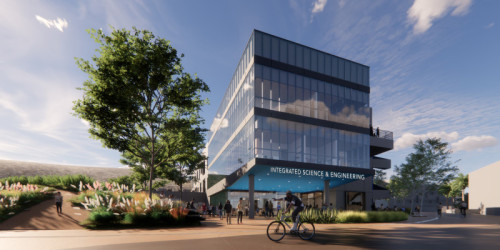
- Looking Back on Successes of 2025As the end of the year approaches, many are already looking ahead to 2026. But before putting the finishing touches on your list of New Year’s resolutions, let’s take a look back at some of the most-talked-about stories of 2025. Hunter Industries Gives Transformational $10M Donation for ISE Building In September, CSUSM announced a transformational $10 million philanthropic investment from Hunter Industries, one of the largest gifts in university history. The donation is supporting the construction of CSUSM’s new Hunter Hall of Science and Engineering, a cornerstone of the university’s commitment to preparing the next generation of engineers and scientists. Perfect Chemistry: Campus Wedding 16 Years in the Making If getting married at one’s place of employment seems unconventional, it shouldn’t to those who know biology professor Elinne Becket and chemistry professor Robert Iafe. The passion they have for their students is the same passion they have for the university, so it makes sense that the tied the knot on campus at the McMahan House on campus. CSUSM Kicks Off Historic $200 Million Fundraising Campaign Through the largest fundraising campaign in university history, CSUSM is aiming to raise $200 million to support student success and power the region’s future. The university officially launched its “Blueprint for the Future” campaign on Sept. 19. It’s an effort that combines philanthropy with grants and research funding. The campaign’s theme reflects both the physical growth on campus and the forward momentum building at CSUSM. Professor Elevates Samoan Language, Culture as Consultant for "Moana 2" Professor Grant Muāgututiʻa never could have dreamed that linguistics would take him to the shores of Oʻahu as he rubbed elbows with Dwayne “The Rock” Johnson and other stars of the Disney glitterati before the world premiere of the animated film “Moana 2” in 2024. Indeed, Muāgututiʻa was more than a little caught off guard when the filmmaking team behind the sequel to the wildly popular movie “Moana” from 2016 contacted him out of the blue two years ago. Construction of New Wellness and Rec Center Underway CSUSM held a Construction Kickoff on Nov. 12 to celebrate construction being underway for the Student Wellness and Recreation Center (SWRC), which is expected to open by summer 2027. CSUSM is partnering with Sea Breeze Properties – developers of North City, which includes CSUSM’s North Commons, The QUAD and the Extended Learning Building – on the SWRC, which will be the latest addition to campus life. Faith, Resilience Help Athlete Through Life-Threatening Crisis It all started with a headache. A seemingly normal ailment, but Malachi Wright doesn’t get headaches. And he definitely doesn’t get headaches that force him to leave work early or have him confined to the couch and throwing up for three straight days. That's when his mom, Ivonne Mancilla, knew this was something more. Wright spent the next 40 days in the hospital, undergoing three brain surgeries with no idea what the future would bring. But Wright defied all odds. Alumna Finds Purpose in Advocacy for Native Children and Families As Maya Goodblanket reflects on her time as a student, she vividly remembers the day she found the California Indian Culture and Sovereignty Center at Cal State San Marcos. Little did she know that she was meeting mentors that day who would help her achieve the career she has today. Goodblanket, a member of the Cheyenne and Arapaho Tribes of Oklahoma, serves as an Indian Child Welfare Act court advocate for the Valley Center-based Indian Health Council, which provides health and wellness services for American Indian communities in north San Diego County. Ask the Expert: A Scientific Perspective on the L.A. Fires When the hills above Los Angeles exploded in flames early last month, Matt Rahn snapped into action. Rahn, though, isn’t a firefighter who was called into duty to help battle what became one of the biggest and most destructive fires in California history. Rather, he’s a wildfire researcher at Cal State San Marcos who, in 2019, created a unique degree program called Wildfire Science and the Urban Interface. He’s also the executive director of the Wildfire Conservancy, a nonprofit research foundation dedicated to serving the state’s firefighters and protecting its communities. Cougar Care Network Marks 10 Years as a Campus Hub for Connection Built on listening first and guiding without judgment, the Cougar Care Network enters its second decade as a trusted stop for students seeking practical help, community and a path forward. The Cougar Care Network (CCN) launched in fall 2015 as part of Cal State San Marcos’ Early Support Initiative within the Student Outreach and Referral (SOAR) program. Chronic Illness a Journey of Strength, Self-Discovery ... and Salt The first time Emmi van Zoest rode in an ambulance was in May 2024. She was in the middle of her 10:30 a.m. Communication 200 class when she realized her vision and hearing were failing. She couldn't keep her legs or arms straight and she couldn’t speak. The full memory is hazy, but she found herself sitting outside of Crash’s Market in the University Student Union with a handful of salt packets and on a Facetime call with her parents, who live in Tennessee. This experience didn’t come out of nowhere. She has postural orthostatic tachycardia syndrome, or POTS, a chronic condition that she has lived with since her junior year of high school. Media Contact Eric Breier, Interim Assistant Director of Editorial and External Affairs ebreier@csusm.edu | Office: 760-750-7314
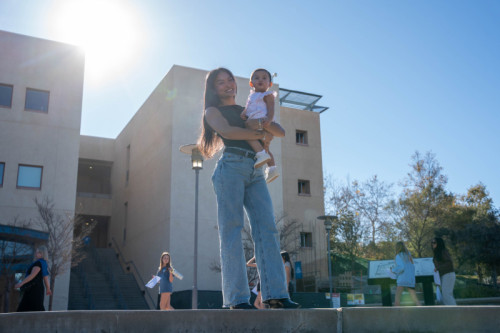
- Labor of Love: New Mom Graduating EarlyThis week, Cameron Aquino will finish her seventh and final semester at Cal State San Marcos, having graduated a semester early with a Bachelor of Arts in psychological science. Barring a disastrous outcome of her finals, she will finish as a member of the College of Humanities, Arts, Behavioral and Social Sciences dean's list in six of her seven semesters. And the one semester she didn’t earn it – fall 2024 – she was a bit preoccupied by having a baby. “And I was really close,” she said of her near-perfect dean’s list record. Aquino will walk in fall commencement at Frontwave Arena in Oceanside during the CHABSS ceremony next week, knowing that she accomplished her goals while allowing nothing to get in the way of her path. And her life journey has been winding. Born in Guam, Aquino has lived in Kentucky, Germany and California. She resided in Germany with her parents after her high school graduation before returning to the U.S. and beginning her undergraduate studies. She maintained the life of a normal college student, working and earning exceptional grades while living with her boyfriend and his family. Then came the surprise. While some students will naturally take a break – her mom was a college student when she got pregnant with her and her brother and never returned to finish her degree – Aquino was determined to not let baby Phoenix be the reason for her slowing down her journey. “Since finding out I was pregnant, I knew I wasn’t going to fall,” she said. “I knew I was going to keep going.” In fact, the preparation and ensuing birth of Phoenix, who turned 1 in November, drove Aquino to quicken her pace. To reach higher to prove to herself, her daughter and her support system that she can accomplish anything. Her near-perfect placement on the dean’s list and overall GPA of 3.67 says otherwise, but it wasn’t easy. “It was a lot of planning,” said Aquino, who commuted from Murrieta throughout her time at CSUSM. “I went through the previous semester and the whole fall semester pregnant, so I had to plan ahead for a lot of things like taking exams early and completing homework assignments early to give myself a cushion. It was a lot of planning with logistics, but I think we made it work.” After the arrival of Phoenix – Aquino wanted a unisex name for a girl just like her own – she went to school mostly in the mornings while her boyfriend attended in the evenings. Gabriel Madrigal is an accounting major who plans to graduate in May. They received help from his parents as well as friends. Aquino is also quick to point out how much CSUSM faculty has helped her in various ways. In particular, Kathie Sweeten, a lecturer who taught an infant and childhood development course while Aquino was pregnant, was influential. Lecturers Neal Dykmans (psychological science) and Melissa McGuire (history) went a long way toward providing an understanding environment. Exactly one week after giving birth, she returned to campus to take a history final. Within days of finishing her finals, she took classes in the subsequent winter session. Aquino said she derives her strength and dedication from her parents. “I get opportunities they never got to pursue higher education,” she said. “Now that she’s born, I want to provide her a better life and a better future than even I had.” Aquino plans to apply for the new Master of Science in clinical counseling psychology program that will start next fall. She has talked to psychological science professors Lisa Graves and Francisco Flores Ramirez about graduate school as she charts a course to eventually earning a Ph.D. in neuropsychology. She wants to work with military veterans. Her parents are coming from Germany to share in her celebration on Monday. Her brother had a baby just last week and he’ll be there, too. Madrigal and his family also will attend. The marking of the moment will be large, no doubt. But to Aquino, there was never an option of not finishing at the highest level she possibly could. “I feel very proud,” she said. “But I also feel like it’s doable. Life just kept throwing things at me left and right all throughout my college years. But it’s nothing you can’t get past or you can’t overcome. It’s just life, and it happens. You take it and you adapt and you do your best with it. “It’s the system of values I’ve had my whole life. No matter how hard it is, life just keeps moving. You’ve got to move along with it.” Media Contact Eric Breier, Interim Assistant Director of Editorial and External Affairs ebreier@csusm.edu | Office: 760-750-7314